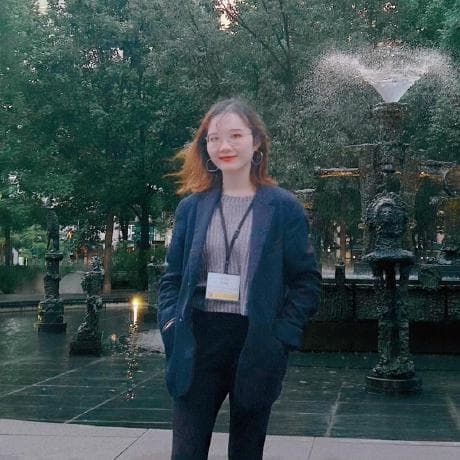
Post-doctoral Researcher, Department of Sociology, Vanderbilt University
About Me
Welcome! I'm Leping Wang, a life course medical sociologist, family demographer, and socio-cultural gerontologist. I use advanced quantitative methods and a global comparative approach for my work. My research asks how and under what conditions social relationships and socioeconomic resources shape health and well-being over the life course, and how the institutions that organize care, work, and family distribute those resources unequally. I have three lines of research:
My first line of research investigates how marriage as an institution exacerbates gender inequality in health, well-being and wealth over the life course. I have multiple publications that come out of this line of work. Two of them are from the project titled “Gender, Marital Histories and Late-life Poverty: Updating Social Security Rules for 21st Century Families” funded by the RRF Foundation (PI: Deborah Carr; co-I: Pamela Smock), published in the Journal of Marriage and Family and The Gerontologist. Two come out of my dissertation work on “The Impact of Social Connectedness on Older Adults’ Mental and Cognitive Health: A U.S.- China Comparison”, published in The Journals of Gerontology, Series B: Psychological Sciences and Social Sciences and Longitudinal and Life Course Studies. At my current post-doc, I am working on the first-of-its-kind NIH-funded National Survey of Never Married Older Adults (NSONMA) to collect pilot survey data among nationally representative never-married U.S. older adults (PI: Lijun Song; Co-Is: Deborah Carr, Brea Perry, Tara McKay, Qingxia (Cindy) Chen, and Siyun Peng).
My second line of research explores the society-level institutional and cultural conditions under which socioeconomic resources protect cognition. One of the working papers along this line is being revised and resubmitted. Stay tuned!
My third line of research examines how institutions evaluate human, cultural, and social capital, and how those evaluations reproduce inequality. My single-authored and first-authored publications from this line of work appear in Research in Social Stratification and Mobility, Sociological Inquiry, and Social Science Research.
In addition to the three main lines of research, I am also committed to community-engaged research focused on the marginalized communities. My collaborative work that involves evaluating the social support program in Immokalee, Florida and developing harmonized matrices for evaluating community health workers' performance across lower- and middle-income countries has been published in Global Health Action and Healthcare in Low-resource Settings. I also wrote this public writing piece on harmonized measures of student well-being and intervention strategies in Learning Well Magazine, and co-wrote this piece that unpacks blatant and ambivalent biological and cultural racism in the U.S. and the Netherlands in Work in Progress (WIP) (with Jonathan Mijs).
Selected Publications
Public Writing
Awards & Recognition


